

What Does SEER Mean?
Higher efficiency is good, but installation quality still decides the outcome.
People ask us all the time what SEER means. SEER stands for Seasonal Energy Efficiency Ratio and is a mathematical measurement of how efficiently a new air conditioning system uses electricity.
Think of it like the miles-per-gallon rating on new cars.

What Is SEER (Seasonal Energy Efficiency Ratio)?
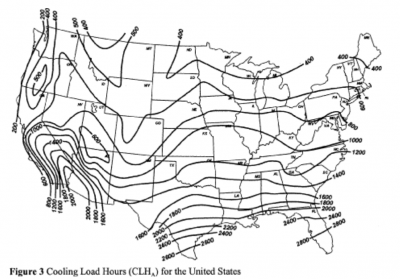
Cooling demand varies by region, which affects real-world system runtime.
SEER is calculated using an equation that combines BTUs, kilowatts, operating hours, and load hours; it is too complex to share here.
In a nutshell, SEER estimates how much cooling you get compared to how much electricity you use over a typical cooling season.
Map of the United States showing recommended R-Values in different regions.
Using a map like this, we can estimate cooling load hours across regions of the United States.
What Is SEER2, and Why the Number Looks Different
Here’s the part that confuses homeowners now.
SEER2 is the newer version of SEER, created because the Department of Energy updated how systems are tested in the lab. Starting January 1, 2023, manufacturers certify systems using the newer Appendix M1 test procedure, and ratings are represented as SEER2 (and EER2, HSPF2). See AHRI: 2023 Energy Efficiency Standards.
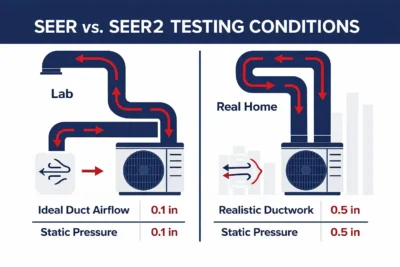
SEER2 uses more realistic duct pressure than the original SEER test.
What changed?
In simple terms, the SEER2 test procedure is tougher and more realistic. It tests equipment under conditions intended to reflect better real homes, including higher external static pressure in the duct system. (Source: AHRI: 2023 Energy Efficiency Standards.)
Does SEER2 mean the equipment got worse?
No. The number often looks lower because the test is different.
If you are comparing older SEER ratings to newer SEER2 ratings, a common rule of thumb is that SEER2 is lower numerically for similar equipment. That does not mean your electric bill got worse overnight. It means the measuring stick changed.
If you want a quick “back of napkin” comparison, some manufacturers suggest estimating SEER2 by dividing SEER by 1.05. Treat that as a rough comparison, not gospel.
SEER vs SEER2: What Homeowners Should Actually Care About
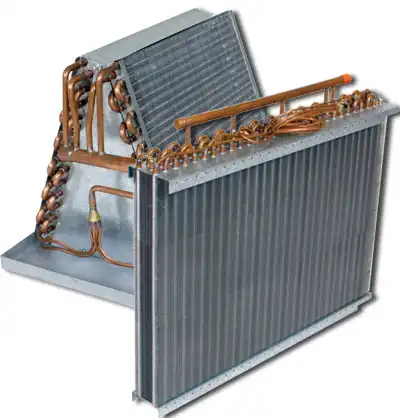
SEER is not just the outdoor unit. The indoor coil matters too.
SEER and SEER2 are efficiency ratings, but they do not automatically predict your home’s cooling cost.
If your ductwork is leaky, airflow is restricted, the system is oversized, or the install is sloppy, a “high efficiency” system can still perform like it is wearing ankle weights.
If you want real savings, the big drivers are:
- Correct sizing
- Proper airflow
- Tight ductwork
- Correct refrigerant charge
- A properly matched indoor and outdoor system
Are SEER Ratings “Fake News”? Here’s the Truth
SEER ratings are Fake News.
Let me explain.
Many salespeople will sell you an AC unit with a high SEER rating and tell you your system will achieve that rating. That is not necessarily true.
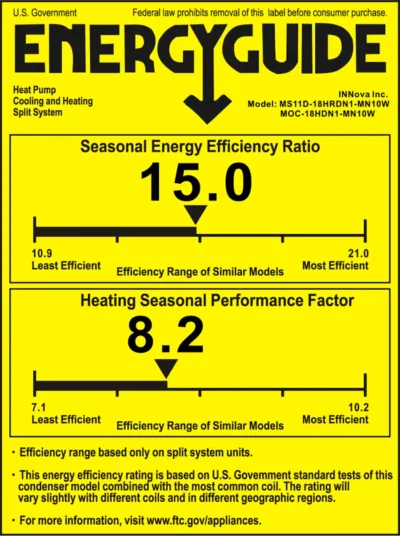
Where SEER is displayed: the EnergyGuide label shows a system’s rated efficiency.
SEER ratings are based on the entire indoor and outdoor system:
- The outdoor unit (AC condenser, or the heat pump condenser)
- The furnace or air handler
- The evaporator coil
These units combined make up your system’s SEER rating.
An AC unit with an 18 SEER rating, paired with a lower-rated furnace and coil, will not achieve an 18 SEER rating.
In the same vein, installing a new AC unit with an old furnace and coil setup will never produce the publicized SEER rating.
SEER Is a Matched System Rating
Because the rating is based on the entire matched system, two homes can install “the same SEER unit” and have totally different outcomes.
You are not buying a single box. You are buying a system.
Always Ask for the AHRI Certificate
To confirm, always request the AHRI certificate to verify that your new system matches the specified ratings.
AHRI (Air-Conditioning, Heating, and Refrigeration Institute) provides a way to verify certified matched-system performance. AHRI Directory of Certified Product Performance.
If you have further questions or would like to know the current SEER rating of your heating and air conditioning system, please get in touch with Extreme Comfort for details.
SEER and SEER2 FAQs: The Questions Homeowners Ask Most
Q: What is SEER2, and how is it different from SEER?
A: SEER2 is the updated efficiency rating for air conditioners and heat pumps. It uses the DOE’s newer Appendix M1 test procedure, which increases external static pressure during testing to better reflect real-world duct conditions, making the rating more representative of how systems operate in homes.
Q: Are SEER2 ratings lower than the original SEER ratings?
A: Numerically, usually yes. Because the Appendix M1 test is more demanding, the same general class of equipment often shows a lower number under SEER2 even though the equipment is not suddenly “worse.” It is a different measuring stick.
Q: How do I convert SEER to SEER2?
A: A common rule of thumb is SEER2 ≈ SEER ÷ 1.05. It’s an estimate (not an exact conversion), but it’s helpful when you’re comparing older SEER-based brochures or quotes to newer SEER2 labels.
Q: Is SEER still used, or has it been replaced?
A: For new equipment ratings, SEER2 has effectively replaced SEER as the labeling standard tied to the updated DOE test procedure and 2023 efficiency standards. You’ll still see SEER on older systems, older inventory, and older marketing materials.
Q: What is a good SEER2 rating for a homeowner shopping in Dallas?
A: “Good” depends on your budget, how long you’ll stay in the home, and your comfort goals, but most homeowner shopping decisions land in the mid-teens SEER2 and up, with premium systems reaching into the low 20s SEER2. The sweet spot is usually where the added upfront cost still makes sense for your usage and timeline.
Q: What is the minimum SEER2 rating allowed in Texas, and does system size matter?
A: Texas is in the DOE Southwest region, where minimums vary by capacity for split systems. For split-system ACs below 45,000 BTU, the minimum is 14.3 SEER2, and for 45,000 BTU and above, it is 13.8 SEER2.
Q: What is EER2, and do I need to worry about it in Texas?
A: EER2 is another efficiency rating updated alongside SEER2. It measures efficiency at a fixed test condition (often referenced at 95°F outdoor). You may see it in equipment specs and AHRI matchups, but for most Texas homeowners, the bigger comparison is SEER2 and ensuring your system is properly matched and installed.
Q: Does a higher SEER2 rating guarantee lower electric bills?
A: Not automatically. Higher SEER2 generally indicates higher efficiency, but real-world performance depends heavily on proper sizing, duct leakage, airflow/static pressure, thermostat settings, insulation, and installation quality. A highly rated system can underperform if airflow or setup is incorrect.
Q: Can I keep my old furnace or coil and still get the advertised SEER2 rating?
A: Usually not. SEER2 (like SEER) is based on a matched system (outdoor unit + indoor coil + furnace/air handler). Mixing new and old components often prevents the system from achieving the published rating and can create performance issues.
Q: What is an AHRI certificate, and why should I ask for it?
A: An AHRI certificate (or AHRI match listing) verifies the rated performance of the specific equipment combination being installed. It’s the easiest way for a homeowner to confirm they’re getting the matched system that supports the claimed efficiency rating.