


Why Is My Furnace Not Heating My Home?
Imagine waking up on a chilly North Texas morning only to discover that your furnace isn’t working. When the Dallas-Fort Worth cold hits unexpectedly, it can be frustrating and uncomfortable. Understanding the potential causes of a malfunctioning furnace can help you quickly identify the problem and call the right professionals, like Extreme Comfort Air Conditioning & Heating, for appropriate action.
Understanding the potential causes of a malfunctioning furnace can help you identify the problem and take appropriate action.
What Could Be Causing My Furnace to Shut Off?
Furnaces are built to keep the temperature in your home consistent throughout, but when they start shutting off unexpectedly, it can indicate several underlying issues.

The Number One Cause of Shutdowns: A severely clogged filter restricts airflow, forcing the furnace to overheat and shut down as a safety measure.
Clogged Air Filters
One common cause of a faulty heating system is a dirty or clogged air filter. Dirty filters can reduce airflow, leading to your furnace overheating and shutting down as a safety precaution.
Faulty Thermostat
If the thermostat is not working correctly, it might send the wrong signals to the furnace, causing it to shut down. Several factors, including dead batteries, wiring issues, sensor problems, improper installation, software glitches, or incorrect calibration, can cause a faulty thermostat.
Ensuring your thermostat is functioning correctly and regularly replacing your air filter can prevent these shutdowns.
Why Is My Furnace Blowing Cold Air? What Are Some Common Furnace Problems?
There are several reasons why your furnace might be blowing cold air.
Faulty Heat Exchanger (The Safety Risk)
The heat exchanger is a vital component that transfers heat to your circulating air. A crack in the heat exchanger means it can’t transfer heat effectively, leading to cold air. More importantly, a cracked heat exchanger poses a serious safety hazard because it can leak toxic Carbon Monoxide (CO) into your living space. If you suspect this issue, call a professional immediately.
Gas Supply Line Problems
Another potential cause is a gas supply issue, such as low gas pressure or a clogged gas line. If you suspect you have a gas supply line issue, contact a licensed air conditioning and heating repair company immediately.
If you smell gas, which smells like rotten eggs, leave your house immediately and call your gas company.

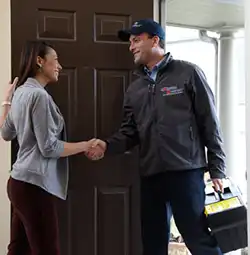
Let’s Get Started!
According to the U.S. Department of Energy, furnaces over 15 years old are less efficient.

Check the Setting: Ensure your thermostat’s fan setting is on “Auto” (not “On”) to prevent the blower from circulating cold air when the furnace is off.
Incorrect Thermostat Setting
One common cause of a furnace blowing cold air is a thermostat set to “on” instead of “auto.” The “on” setting keeps the blower running even when the furnace is not actively heating, resulting in cold drafts.
Running the fan on “on” also dramatically increases your electricity bill because the blower motor runs 24/7, making the “Auto” setting essential for efficiency.
Faulty Ignition or Pilot Light
A faulty ignition or pilot light can prevent the furnace from turning on. According to the American Council for an Energy-Efficient Economy (ACEEE) report, older furnaces with pilot lights are more prone to ignition issues, especially if not maintained regularly.
Clogged Air Filter
If your furnace filter is clogged, it may not shut the system off completely, but it can still restrict airflow and cause the system to overheat, leading to cold air blowing through the vents.
Worn Blower Belt
Another common issue is wear and tear on the blower belt, which can cause your furnace to make noise or stop working altogether.

Energy Loss: Damaged or poorly sealed ductwork can leak expensive hot air into the attic, leading to uneven heating and significantly higher utility bills.
Leaking Ductwork
As a homeowner, you should also be aware of potential ductwork leaks, which can reduce your heating system’s efficiency and cause uneven heating throughout your home.
Fan Problems
Unusual noises from the furnace, such as banging, rattling, or squealing, are signs of fan problems.

The Heat Source: The furnace’s heat exchanger safely transfers heat from the combustion process to the air circulating through your home.
Failing Heat Exchanger
If your furnace blows cold air, it could indicate a faulty heat exchanger or a gas supply issue.
Tripped Circuit Breaker
If your furnace is completely unresponsive, it might be due to a power outage, a tripped breaker, or a more severe electrical problem.
According to the Department of Energy (DOE), properly maintaining and annually servicing your furnace can prevent these issues and keep your home warm during the colder months.
Why Is My Furnace Making Strange Noises?
Strange noises from your furnace can be a sign of underlying issues.
Furnace Is Making Banging Noises or Rattling Sounds
Banging noises inside the furnace could be a symptom of a loose component or a problem with the blower motor. A loose duct or a fan imbalance might cause rattling sounds.
Why Is My Furnace Squealing?
A high-pitched squeal could indicate that the blower belt is worn out or misaligned. This type of problem will continue to deteriorate if not professionally serviced.
According to a study published by the National Institute of Standards and Technology (NIST), promptly addressing these noises can prevent further damage to your furnace. If you hear unusual sounds, it’s best to schedule a heating system repair with a trusted professional.

Licensed HVAC Technician Repairing Furnace
How Do I Know If My Furnace Needs a Repair?
If you’re experiencing any of the issues mentioned above, your furnace needs repair. Addressing these problems immediately will help prevent further damage or a complete system breakdown and ensure your home remains comfortable.
Additionally, if your furnace is not heating your home evenly or if it cycles on and off frequently, you need a furnace repair technician to diagnose and repair your HVAC system.
Furthermore, your furnace may need repair if you notice an increase in your energy bills without a corresponding increase in usage. An increase in energy bills may indicate that your furnace is working harder than it should due to underlying issues.
Regular preventative maintenance can help identify these problems in advance. Still, if you experience any of these symptoms, it may be time to contact Extreme Comfort Air Conditioning & Heating for a furnace repair.
Is It Better to Repair or Replace My Furnace?
The decision to repair or replace your furnace depends on several factors, including its age, the nature of the problem, and the cost of repairs.
If the repairs are relatively minor and the furnace is still in good condition, it may be worth fixing it.
However, according to the U.S. Department of Energy, furnaces over 15 years old are typically less efficient and may cost more to repair than they are worth. If your furnace is old and requires frequent repairs, replacing it may be more cost-effective.
Extreme Comfort Air Conditioning & Heating specializes in furnace repair and replacement across the DFW Metroplex.
Our first goal is always to provide our customers with an economical repair option; however, if your furnace is beyond repair, we can help you select a new system that is perfectly sized for your North Texas home and budget.
Conclusion
Dealing with a furnace that does not heat your home can be stressful, but understanding the potential causes and knowing when to seek professional help can make the process easier.
Semi-annual maintenance and prompt repairs can extend your furnace’s lifespan and keep your home warm throughout the winter.
If you are experiencing issues with your furnace making noise, blowing cold air, or not working at all, do not hesitate to contact Extreme Comfort Air Conditioning & Heating for expert assistance.