


Why Is My AC Not Blowing Cold Air? Troubleshooting Tips and Solutions
As summer temperatures rise, a properly functioning air conditioning (AC) system is essential to maintain indoor comfort. If you are frustrated by your air conditioner not blowing cold, it is time to investigate the potential causes. We will explore common reasons your AC isn’t blowing cold air and offer practical troubleshooting steps and solutions to help you restore your AC’s cooling efficiency before calling for an AC repair service.
Understanding the Importance of Cold Air
Before diving into potential causes why your AC is on but not blowing cold air, consider why cold air is a fundamental aspect of a properly working AC system. Cold air indicates that the cooling process is functioning correctly, ensuring a comfortable indoor environment during hot weather. Here are some of the most common reasons your air conditioner is not working correctly and is not blowing cold air.
Quick DIY Fixes
1) Check Your Thermostat Settings
A malfunctioning thermostat can lead to inaccurate temperature readings and improper cooling. The thermostat must be properly calibrated. Ensure that your thermostat is set to the cooling mode and the temperature is set lower than the room temperature. Sometimes, incorrect settings can make it seem like the AC is not cooling. If issues persist, consider having a professional assess or replace the thermostat.
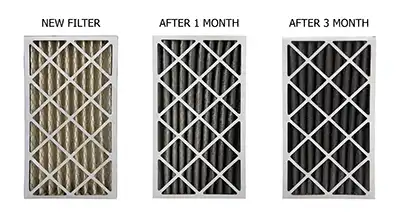
Clogged air filters are one of the top reasons an AC stops blowing cold air.
2) Replace The Air Filter
Think of the air filter as the lungs of your AC. If it’s clogged with dust and dirt, your AC can’t breathe properly, hindering airflow and forcing it to work harder to cool the air. Change or clean your air filters regularly to maintain proper airflow and cooling performance. Aim to replace standard 4” air filters every three months to ensure consistent cooling.
3) Clear the Outdoor Condenser
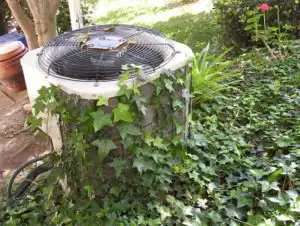
Obstructions around the outdoor condenser can choke airflow and prevent proper cooling.
The AC condenser unit, situated outdoors, is essential for the cooling process. If it is dirty, blocked, or malfunctioning, it can disrupt heat exchange, leading to warm air indoors. A likely cause is a power issue; check the circuit breaker for tripped switches. Coils clogged with dirt or obstructions around the condenser unit can hinder heat exchange and prevent proper cooling. Electrical problems and component damage require a professional HVAC Technician for safe, effective repair.


Let’s Get Started!



More Serious Component Failures
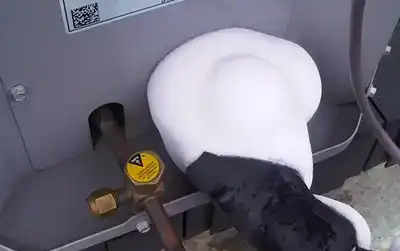
If you see ice on your AC unit, turn it off immediately—frozen coils can damage the compressor.
1) Ice On The Condenser
You may ask, “Should I turn off the AC if it is not cooling?” If you see ice forming anywhere on your AC system, turn it off immediately and contact a professional HVAC repair technician. A frozen AC unit indicates a problem, and merely turning off the system to allow the ice to thaw will not fix the underlying issue. Operating an AC system with ice on it can cause more damage and lead to a more expensive repair.
2) Refrigerant Levels
Refrigerant is essential for absorbing heat from indoor air, allowing your AC to deliver cold air. Low refrigerant levels can result from a leak in the refrigerant lines and affect your air conditioner’s ability to cool your home effectively. We recommend contacting a professional HVAC technician for AC repair if you suspect your air conditioner is low on refrigerant, to assess and replenish it as needed; only a certified HVAC technician should handle refrigerant-related issues.
3)Ductwork Leaks or Blockages
Leaky ducts can allow cool air to escape before it reaches your living spaces, leading to uneven air distribution and reduced cooling efficiency. A visual inspection of your ductwork for obvious leaks is the first step, then consider professional evaluation and repair.
4) Unit Size
Size matters, and if the air conditioner is too small for the space it is cooling, it might struggle to cool effectively, especially during hot weather. A licensed HVAC technician can evaluate the area to be cooled and determine whether the air conditioner is the proper size for your home.
5) Compressor Issues
The compressor is the heart of your AC system; a malfunctioning compressor is often the reason it is not cooling effectively. Compressor problems often require professional attention.
6) Fan Problems
If the indoor or outdoor fan is not functioning correctly, it can affect cooling. Check for obstructions and ensure the fans are functioning properly. A malfunctioning fan motor, often signified by noise or non-rotation, requires professional assessment.
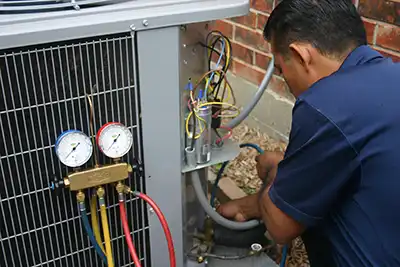
Low refrigerant or leaks can stop your AC from blowing cold air and require a certified technician.
7) Lack of Maintenance
Neglecting regular AC maintenance can lead to various issues, including inadequate cooling. Schedule routine maintenance by a professional to ensure all components function optimally and extend the lifespan of your air conditioning system.
Conclusion:
Dealing with a home AC that isn’t blowing cold air requires a systematic approach. If you have checked the basic settings and filters and the problem persists, we recommend contacting a licensed HVAC technician to diagnose and fix the issue. An air conditioning system serviced by individuals without the necessary expertise often leads to further damage or safety hazards.
AC Not Blowing Cold Air: FAQs and Next Steps
Q: How can I tell if my AC compressor is broken?
A: Signs include the outdoor unit running but blowing warm air, loud humming or clicking with no fan turning, or the breaker tripping repeatedly. A healthy (outdoor) condenser should push hot air out of the top when cooling. Anything else needs a professional diagnosis.
Q: How long does a typical AC repair service call take?
A: Most AC diagnostic visits and minor repairs take 1 to 3 hours. More complex issues that require specialty parts or refrigerant work may require additional time or a follow-up visit.
Q: Why is my AC freezing up, even after I change the filter?
A: Freezing usually means restricted airflow (dirty coils, blocked returns) or a refrigerant leak. Turn the system off immediately—a frozen coil can damage the compressor—and schedule professional service.
Q: How often should I schedule professional AC maintenance?
A: Schedule maintenance once per year, ideally in the spring. Annual tune-ups improve efficiency, prevent breakdowns, and extend the system’s lifespan.
Q: My AC is blowing cold air, but the house still feels humid. What’s wrong?
A: High humidity often means the system is oversized or short-cycling, so it cools too quickly to remove moisture. Other causes include low refrigerant, dirty coils, or poor airflow. A technician can diagnose the exact issue.
Q: Is it safe to run my AC if it’s not blowing cold air?
A: No. Running the AC without proper cooling can freeze the coil or overheat the compressor. Turn the system off to prevent costly damage and schedule service.
Q: Why is my AC leaking water inside my home?
A: Common causes include a clogged drain line, a frozen coil, or low refrigerant. Turn off the unit to prevent water damage and have a technician inspect the system.